Chapter 17 Coordination And Control Biology 12th Class Punjab MCQ Tests
12th Class Biology Chapter 17 MCQ Tests
Chapter 17 of 12th Class Biology has 50 questions. If you take an online MCQ test, the system will randomly choose the questions. If you want to take the quiz by chapter then click the start test button.
Total Questions: 50
Total Marks: 50
Time: 50 Mins
Total Questions: 50
Total Marks: 50
Time: 50 Mins
50Min : 00 Sec Remaining
Question # 1
Glucocorticoids and mineralocorticoids are released by which of the following Gland?
Question # 2
Which of the following would not be produced by the sympathetic nervous system during the stress response?
Question # 3
The stem elongation is controlled through:
Question # 4
In plants, temperature, water and cold is are examples of
Question # 5
The voltage gated channel present in presynaptic membrane open because of influx of
Question # 6
Enlargement of the thyroid gland is called:
Question # 7
which secretion pass through the cell membrane of the target cell.
Question # 8
Animals which has a nervous system but no brain.
Question # 9
Which of the following signaling molecules binds to a receptor situated in the cytosol, rather than the outer membrane of the cell?
Question # 10
The most primitive invertebrate to possess musculo-epithelial cells and nerve cells is:
Question # 11
In plants, which major phytohormone plays an essential part in acting toward varied range of stresses
Question # 12
The hormone that helps to maintain the bodys salt and water levels which, in turn, regulates blood pressure is:
Question # 13
The chemical released by the motor neuron at the neuromuscular synapse that initiates a muscle contraction is:
Question # 14
In Alzheimer's disease, the _______ is one of the first regions of the brain to be affected, leading to the confusion and loss of memory.
Question # 15
Receptors present in _______ respond to touch, pressure, pain and temperature.
Question # 16
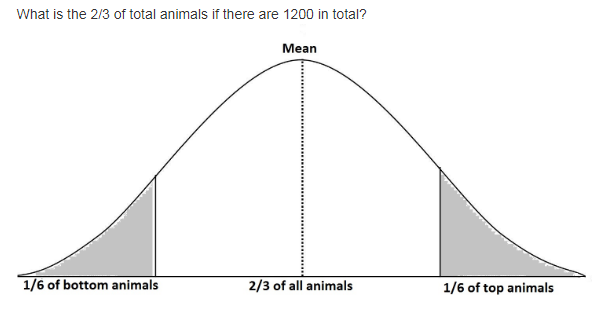
What is the 2/3 of total animals if there are 1200 in total?
Question # 17
One of the hallmarks of _______ is the accumulation of amyloid plaques between nerve cells (neurons) in the brain.
Question # 18
A _______ is a protein molecule present in plasma membrane, that receives chemical signals from outside a cell.
Question # 19
House keeping, nursing young workers, attending queen bee, guard hive and collection of nectar all are performed by which of the following kind of honey bees?
Question # 20
A chemical messenger may refer to:
Question # 21
The column, in the center of the cord, is shaped like a butterfly and consists of cell bodies of interneurons, motor neurons, neuroglia cells and unmyelinated axons.
Question # 22
Which of the following is/are the main cause(s) of epilepsy?
Question # 23
Which of the following neurons are found in receptors such as the eyes, ears, tongue and skin?
Question # 24
Which of the following are the actions of oxytocin?
Question # 25
The behaviors like spider spinning a web, birds building a nest and caterpillar making a cocoon comes under:
Question # 26
Which one of the following hormone is responsible for maintaining apical dominance?
Question # 27
Which of the following combinations is example of chemical stress?
Question # 28
Receptors for peptide hormones are present in
Question # 29
Touch receptors located near the surface of the skin are
Question # 30
Pituitary gland hormones can affect other organs and glands, especially:
Question # 31
Alzheimer's is the most common form of which of these?
Question # 32
The center of the nervous system is
Question # 33
Which type of frequency curve will be made from this frequency distribution?

Question # 34
Which of the following are not true for operant conditioning?
Question # 35
The family of proteins that are produced by cells in response to exposure to stressful conditions.
Question # 36
Which of the following directional movement is related with growth?
Question # 37
Which one of the following is not the function of testosterone?
Question # 38
Signs of Alzheimer's include the symptoms:
Question # 39
High concentration of ________ is present in ripening fruits.
Question # 40
Which one of the followings not an example of an external stimulus?
Question # 41
_______ in multicellular organisms are either glands or muscles.
Question # 42
The forebrain consists of two subdivisions called the _______ and diencephalon.
Question # 43
A plant that has been raised in insufficient light, even total darkness is known as:
Question # 44
_______ is an example of an internal stimulus.
Question # 45
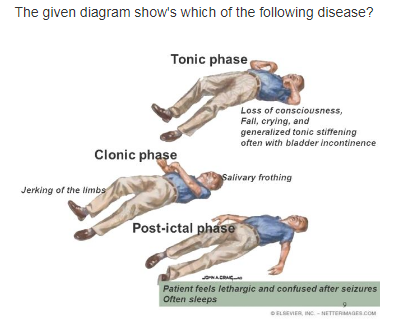
The given diagram show's which of the following disease?
Question # 46
Which one of the following hormone is not growth inhibitor?
Question # 47
Which one of the following is the function of abscisic acid?
Question # 48
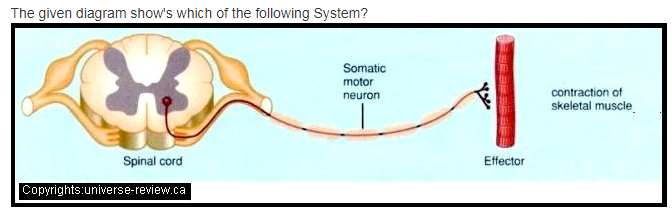
The given diagram show's which of the following System?
Question # 49
A _________ is a series or sequence of acts that occur behaviorally in animals.
Question # 50
In planarian, _______ act as photoreceptors and are used to move away from light sources.
Total Questions
1234567891011121314151617181920212223242526272829303132333435363738394041424344454647484950
Question # 1
Glucocorticoids and mineralocorticoids are released by which of the following Gland?
Question # 2
Which of the following would not be produced by the sympathetic nervous system during the stress response?
Question # 3
The stem elongation is controlled through:
Question # 4
In plants, temperature, water and cold is are examples of
Question # 5
The voltage gated channel present in presynaptic membrane open because of influx of
Question # 6
Enlargement of the thyroid gland is called:
Question # 7
which secretion pass through the cell membrane of the target cell.
Question # 8
Animals which has a nervous system but no brain.
Question # 9
Which of the following signaling molecules binds to a receptor situated in the cytosol, rather than the outer membrane of the cell?
Question # 10
The most primitive invertebrate to possess musculo-epithelial cells and nerve cells is:
Question # 11
In plants, which major phytohormone plays an essential part in acting toward varied range of stresses
Question # 12
The hormone that helps to maintain the bodys salt and water levels which, in turn, regulates blood pressure is:
Question # 13
The chemical released by the motor neuron at the neuromuscular synapse that initiates a muscle contraction is:
Question # 14
In Alzheimer's disease, the _______ is one of the first regions of the brain to be affected, leading to the confusion and loss of memory.
Question # 15
Receptors present in _______ respond to touch, pressure, pain and temperature.
Question # 16
What is the 2/3 of total animals if there are 1200 in total?
Question # 17
One of the hallmarks of _______ is the accumulation of amyloid plaques between nerve cells (neurons) in the brain.
Question # 18
A _______ is a protein molecule present in plasma membrane, that receives chemical signals from outside a cell.
Question # 19
House keeping, nursing young workers, attending queen bee, guard hive and collection of nectar all are performed by which of the following kind of honey bees?
Question # 20
A chemical messenger may refer to:
Question # 21
The column, in the center of the cord, is shaped like a butterfly and consists of cell bodies of interneurons, motor neurons, neuroglia cells and unmyelinated axons.
Question # 22
Which of the following is/are the main cause(s) of epilepsy?
Question # 23
Which of the following neurons are found in receptors such as the eyes, ears, tongue and skin?
Question # 24
Which of the following are the actions of oxytocin?
Question # 25
The behaviors like spider spinning a web, birds building a nest and caterpillar making a cocoon comes under:
Question # 26
Which one of the following hormone is responsible for maintaining apical dominance?
Question # 27
Which of the following combinations is example of chemical stress?
Question # 28
Receptors for peptide hormones are present in
Question # 29
Touch receptors located near the surface of the skin are
Question # 30
Pituitary gland hormones can affect other organs and glands, especially:
Question # 31
Alzheimer's is the most common form of which of these?
Question # 32
The center of the nervous system is
Question # 33
Which type of frequency curve will be made from this frequency distribution?
Question # 34
Which of the following are not true for operant conditioning?
Question # 35
The family of proteins that are produced by cells in response to exposure to stressful conditions.
Question # 36
Which of the following directional movement is related with growth?
Question # 37
Which one of the following is not the function of testosterone?
Question # 38
Signs of Alzheimer's include the symptoms:
Question # 39
High concentration of ________ is present in ripening fruits.
Question # 40
Which one of the followings not an example of an external stimulus?
Question # 41
_______ in multicellular organisms are either glands or muscles.
Question # 42
The forebrain consists of two subdivisions called the _______ and diencephalon.
Question # 43
A plant that has been raised in insufficient light, even total darkness is known as:
Question # 44
_______ is an example of an internal stimulus.
Question # 45
The given diagram show's which of the following disease?
Question # 46
Which one of the following hormone is not growth inhibitor?
Question # 47
Which one of the following is the function of abscisic acid?
Question # 48
The given diagram show's which of the following System?
Question # 49
A _________ is a series or sequence of acts that occur behaviorally in animals.
Question # 50
In planarian, _______ act as photoreceptors and are used to move away from light sources.
Total Questions
1234567891011121314151617181920212223242526272829303132333435363738394041424344454647484950
Biology MCQ Test by Topics
- +17.1 Introduction
- +17.2 Coordination in Plants
- +17.2.1 Control Through Harmones
- +17.2.2 Plant Movements
- +17.2.3 Responses to Environmental Stresses in Plants
- +17.2.4 Defense Against Pathogens in Plants
- +17.2.5 Biological Clocks and Circadian Rhythms
- +17.2.6 Plant Hormones
- +17.3 Coordination in Animals
- +17.3.1 Nervous Coordination
- +17.3.2 Working of sensory Reseptors with Special Reference to skin
- +17.3.3 Neurons
- +17.3.4 Effectors
- +17.3.5 Reflex Arc
- +17.4 Nerve Impulse
- +17.5 Synapse
- +17.6 Evolution of Nervous System
- +17.7 Human Nervous System
- +17.7.1 Central Nervous System (CNS)
- +17.7.2 Peripheral Nervous System (PNS)
- +17.7.3 Autonomic Nervous System
- +17.7.4 Nervous Disorders
- +17.7.5 Effect of Drugs on Coordination
- +17.8 Chemical Coordination
- +17.8.1 Hormones
- +17.9 Endocrine glands of Mammals
- +17.9.1 The Pituitary Gland
- +17.9.2 Thyroid Gland
- +17.9.3 Parathyroids
- +17.9.4 Islets of langerhans (Pencreas)
- +17.9.5 Adrenals
- +17.9.6 Gut
- +17.10 Gonads
- +17.10.1 Ovary
- +17.10.2 Testes
- +17.10.3 Feedback Machanism
- +17.11 Behaviour
- +17.11.1 Innate Behaviour
- +17.11.2 Instincts and Learning
- +17.11.3 Learning Behaviour (Modification through experience)
Biology


12th Class Online Classes 2026
Updated on: 17-10-2026
12th Class Online Preparation
12th Class 2026 Online
12th Class 2026
Add a Comment
Comments will be shown after admin approval.
Spam comments will not be approved at all.
Matric Result 2026 Punjab
10th Class Result 2026 Punjab
9th Class Result 2026 Punjab Boards
10th Class Result Gazette 2026 Punjab
Punjab Past Papers Matric 9th 10th
Primary Results 5th & 8th Class
BISE Results Intermediate & Matric
BISE Punjab Boards
Sindh Educational Boards
KPK Examination Boards
Technical Boards
Public Service Commission
University Results Gruaduation, Masters Classes
Subscribe by Email
Subscribe by Email
Subscribe to Rss Feed


Position Holders Matric 2026
Position Holders 9th Class 2026
Position Holders Inter 2026
Position Holders 11th Class 2026
Punjab 12th Class Biology