Chapter 16 Support And Movements Biology 12th Class Punjab MCQ Tests
12th Class Biology Chapter 16 MCQ Tests
Chapter 16 of 12th Class Biology has 50 questions. If you take an online MCQ test, the system will randomly choose the questions. If you want to take the quiz by chapter then click the start test button.
Total Questions: 50
Total Marks: 50
Time: 50 Mins
Total Questions: 50
Total Marks: 50
Time: 50 Mins
50Min : 00 Sec Remaining
Question # 1
Unlike tropisms, nastic movements are in response to:
Question # 2
The bicep is the _______ , while the tricep is the _______.
Question # 3
In terrestrial animals, ________ locomotion means walking with the toes and metatarsals flat on the ground.
Question # 4
The pectoral fins on most fish control pitching which is _______ motion of the body.
Question # 5
What would be the role of ecdysone?
Question # 6
The response of different organisms to the environmental rhythms of light and darkness is ________.
Question # 7
Epinasty is controlled by which of the following hormone?
Question # 8
The number of _______ formed between actin and myosin determine the amount of tension that a muscle fiber can produce.
Question # 9
Fibers and sclereid are two main types of ________ tissues.
Question # 10
Marked softening of bones refers to which one of the following disease?
Question # 11
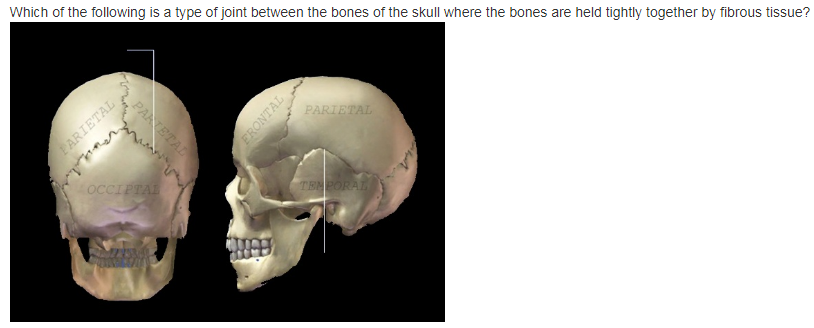
Which of the following is a type of joint between the bones of the skull where the bones are held tightly together by fibrous tissue?
Question # 12
The main purpose of the _______ fin is to stabilize the animal against rolling and to assist in sudden turns.
Question # 13
The microfibrils forming the basic skeleton of a cilium together known as Kinetodesmata. Each kinetodesmal region shows _______ fibrillar arrangement like a flagellum.
Question # 14
_______ appears to come on suddenly, often in the form of a painfully swollen big toe or lower body joint.
Question # 15
Which of the following makes heartwood durable?
Question # 16
Flexion of the shoulder or hip refers to movement of the arm or leg _______.
Question # 17
There are two methods of locomotion in Euglena. One is euglenoid movement and the other is:
Question # 18
The attachment site that doesn't move during contraction is:
Question # 19
________ shows the best adaptation for locomotion.
Question # 20
Mineral concentration of the matrix is maintained by which one of the following?
Question # 21
which of the following are considered as autonomic movements in plants.
Question # 22
The bones like tarsals, metatarsals and phalanges are the part of which of the following?
Question # 23
_______ functions as a hydrostatic, or ballast, organ, enabling the fish to maintain its depth without floating upward or sinking.
Question # 24
Skeletal muscle contains the cytoplasmic proteins myosin and actin (also known as "_______" and "_______" filaments, respectively).
Question # 25
The cork cambium, cork cells, and phelloderm are collectively termed the :
Question # 26
Auxin stimulates faster elongation of the _____ cells.
Question # 27
_______ is the only type of cartilage that contains type I collagen in addition to the normal type II.
Question # 28
Gibberellins are plant hormones that regulate various developmental processes. Gibberellins controls :
Question # 29
The primary support system which is made from hard connective tissue in vertebrates is the _________ .
Question # 30
Which one of the following types of sclereids are star shaped?
Question # 31
The fruit wall is very thin and is fused to the seed coat. Fruit walls have:
Question # 32
Skeletal muscle is one of three major muscle types, a form of striated muscle tissue which is under the _______ control of the somatic nervous system.
Question # 33
Besides the maxilla, the hard palate is also composed of the:
Question # 34
The _______ of the muscle is the fleshy part of the muscle in between the tendons that does the actual contraction.
Question # 35
Which of the following plant hormone is involved in positive geotropism?
Question # 36
Rickets is a skeletal disorder thats caused by a lack of ________, calcium, or phosphate.
Question # 37
Total 22 bones are present in the skull, out of which _________ are cranial bones.
Question # 38
An endoskeleton is associated with which of the following functions?
Question # 39
Microcephaly is a rare_______ condition in which an infant's head is significantly smaller than the heads of other children of the same age and sex.
Question # 40
In amoeba the _______ starts to spread out into a protuberance called a pseudopodium .
Question # 41
Swift walking is the mode of locomotion in:
Question # 42
The orbicularis oculi is a muscle located in the _______.
Question # 43
_______ in amoeboid locomtion describes the contraction and relaxation events which are enforced by osmotic pressure and other ionic charges.
Question # 44
Of the following fibrous joints, which one forms the joints between the skull bones?
Question # 45
which hormone regulates stem elongation in young grass seedlings and most herbs.
Question # 46
_______ flex the arm at the elbow.
Question # 47
In _______ almost any joint can be affected, but the condition most often causes problems in the knees, hips and small joints of the hands.
Question # 48
_______ are the subunits of myofibrils.
Question # 49
The movement of a plant in response to a touch or contact is:
Question # 50
Which of the following is the stimulus for thermotactic movement?
Total Questions
1234567891011121314151617181920212223242526272829303132333435363738394041424344454647484950
Question # 1
Unlike tropisms, nastic movements are in response to:
Question # 2
The bicep is the _______ , while the tricep is the _______.
Question # 3
In terrestrial animals, ________ locomotion means walking with the toes and metatarsals flat on the ground.
Question # 4
The pectoral fins on most fish control pitching which is _______ motion of the body.
Question # 5
What would be the role of ecdysone?
Question # 6
The response of different organisms to the environmental rhythms of light and darkness is ________.
Question # 7
Epinasty is controlled by which of the following hormone?
Question # 8
The number of _______ formed between actin and myosin determine the amount of tension that a muscle fiber can produce.
Question # 9
Fibers and sclereid are two main types of ________ tissues.
Question # 10
Marked softening of bones refers to which one of the following disease?
Question # 11
Which of the following is a type of joint between the bones of the skull where the bones are held tightly together by fibrous tissue?
Question # 12
The main purpose of the _______ fin is to stabilize the animal against rolling and to assist in sudden turns.
Question # 13
The microfibrils forming the basic skeleton of a cilium together known as Kinetodesmata. Each kinetodesmal region shows _______ fibrillar arrangement like a flagellum.
Question # 14
_______ appears to come on suddenly, often in the form of a painfully swollen big toe or lower body joint.
Question # 15
Which of the following makes heartwood durable?
Question # 16
Flexion of the shoulder or hip refers to movement of the arm or leg _______.
Question # 17
There are two methods of locomotion in Euglena. One is euglenoid movement and the other is:
Question # 18
The attachment site that doesn't move during contraction is:
Question # 19
________ shows the best adaptation for locomotion.
Question # 20
Mineral concentration of the matrix is maintained by which one of the following?
Question # 21
which of the following are considered as autonomic movements in plants.
Question # 22
The bones like tarsals, metatarsals and phalanges are the part of which of the following?
Question # 23
_______ functions as a hydrostatic, or ballast, organ, enabling the fish to maintain its depth without floating upward or sinking.
Question # 24
Skeletal muscle contains the cytoplasmic proteins myosin and actin (also known as "_______" and "_______" filaments, respectively).
Question # 25
The cork cambium, cork cells, and phelloderm are collectively termed the :
Question # 26
Auxin stimulates faster elongation of the _____ cells.
Question # 27
_______ is the only type of cartilage that contains type I collagen in addition to the normal type II.
Question # 28
Gibberellins are plant hormones that regulate various developmental processes. Gibberellins controls :
Question # 29
The primary support system which is made from hard connective tissue in vertebrates is the _________ .
Question # 30
Which one of the following types of sclereids are star shaped?
Question # 31
The fruit wall is very thin and is fused to the seed coat. Fruit walls have:
Question # 32
Skeletal muscle is one of three major muscle types, a form of striated muscle tissue which is under the _______ control of the somatic nervous system.
Question # 33
Besides the maxilla, the hard palate is also composed of the:
Question # 34
The _______ of the muscle is the fleshy part of the muscle in between the tendons that does the actual contraction.
Question # 35
Which of the following plant hormone is involved in positive geotropism?
Question # 36
Rickets is a skeletal disorder thats caused by a lack of ________, calcium, or phosphate.
Question # 37
Total 22 bones are present in the skull, out of which _________ are cranial bones.
Question # 38
An endoskeleton is associated with which of the following functions?
Question # 39
Microcephaly is a rare_______ condition in which an infant's head is significantly smaller than the heads of other children of the same age and sex.
Question # 40
In amoeba the _______ starts to spread out into a protuberance called a pseudopodium .
Question # 41
Swift walking is the mode of locomotion in:
Question # 42
The orbicularis oculi is a muscle located in the _______.
Question # 43
_______ in amoeboid locomtion describes the contraction and relaxation events which are enforced by osmotic pressure and other ionic charges.
Question # 44
Of the following fibrous joints, which one forms the joints between the skull bones?
Question # 45
which hormone regulates stem elongation in young grass seedlings and most herbs.
Question # 46
_______ flex the arm at the elbow.
Question # 47
In _______ almost any joint can be affected, but the condition most often causes problems in the knees, hips and small joints of the hands.
Question # 48
_______ are the subunits of myofibrils.
Question # 49
The movement of a plant in response to a touch or contact is:
Question # 50
Which of the following is the stimulus for thermotactic movement?
Total Questions
1234567891011121314151617181920212223242526272829303132333435363738394041424344454647484950
Biology MCQ Test by Topics
- +16.1 Support in Plants
- +16.1.1 Parenchyma Cells
- +16.1.2 Sclerenchyma Cells
- +16.1.3 Collenchyma Cells
- +16.1.4 Significance of Secondary Growth
- +16.2 Movements in Plants
- +16.2.1 Types of Movements
- +16.2.2 Role of Plant Growth Substances in Plant Movement
- +16.3 Support and Movements in Animals
- +16.3.1 Hydrostatic Skeleton
- +16.3.2 Exoskeleton
- +16.3.1 Endoskeleton
- +16.4 Human Skeleton
- +16.4.1 Axial Skeleton
- +16.4.2 Appendicular Skeleton
- +16.4.3 Joints
- +16.5 Deformities of Skeleton
- +16.5.1 Genetic Causes
- +16.5.2 Hormonal Causes
- +16.5.3 Nutritional Causes
- +16.5.4 Rickets
- +16.5.4 Disc-Slip
- +16.5.5 Spondylosis
- +16.5.6 Sciatica
- +16.5.7 Arthritis
- +16.5.8 Repair of Broken Bones
- +16.6 Muscles
- +16.6.1 Smooth Muscles
- +16.6.2 Cardiac Muscles
- +16.6.3 Skeletal Muscles
- +16.6.4 Controlling the Actin - Myosin Interaction By Ca++ ions
- +16.6.5 Energy for Muscle Contraction
- +16.6.6 Muscle Fatigue
- +16.6.7 Tetany
- +16.6.8 Cramp
- +16.6.9 Arrangement of Skeletal Muscles for Movement of Skeleton
- +16.6.10 Movement of Bones
- +16.7 Locomotion in Proctoctists and Invertebrates
- +16.7.1 Locomotion in Euglena
- +16.7.2 Locomotion in Paramecium
- +16.7.3 Locomotion in Amoeba
- +16.7.4 Locomotion in Jelly Fish
- +16.7.5 Locomotion in Earthworm
- +16.7.6 Locomotion in Cockroach
- +16.7.7 Locomotion in Snail
- +16.7.8 Locomotion in Star Fish
- +16.8 Locomotion and Skeleton in Vertebrates
- +16.8.1 Swimming in Fishes
- +16.8.2 Locomotion in Amphibian
- +16.8.3 Locomotion in Reptiles
- +16.8.4 Locomotion in Air
- +16.8.5 Locomotion in Mammals
- +16.8.6 Evloutionary changes in the arrangement of bones and related mode of locomotion in major groups of vertebrates
Biology





12th Class Online Classes 2026
Updated on: 17-10-2026
12th Class Online Preparation
12th Class 2026 Online
12th Class 2026
Add a Comment
Comments will be shown after admin approval.
Spam comments will not be approved at all.
Matric Result 2026 Punjab
10th Class Result 2026 Punjab
9th Class Result 2026 Punjab Boards
10th Class Result Gazette 2026 Punjab
Punjab Past Papers Matric 9th 10th
Primary Results 5th & 8th Class
BISE Results Intermediate & Matric
BISE Punjab Boards
Sindh Educational Boards
KPK Examination Boards
Technical Boards
Public Service Commission
University Results Gruaduation, Masters Classes
Subscribe by Email
Subscribe by Email
Subscribe to Rss Feed


Position Holders Matric 2026
Position Holders 9th Class 2026
Position Holders Inter 2026
Position Holders 11th Class 2026
Punjab 12th Class Biology